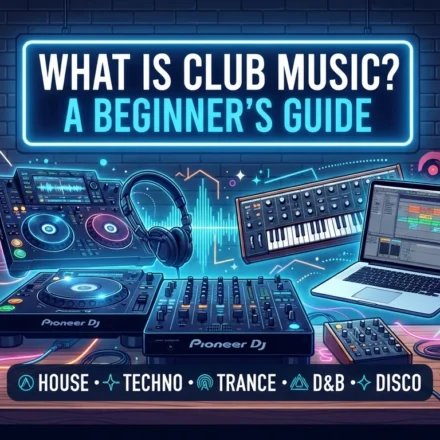



























What Makes a Good Dance Track?
A good dance track is more than just a fast tempo and a strong beat. The best dance music combines rhythm, energy, melody, sound design, and structure in a way that makes people want to move. Whether it is played in a club, during a workout, on a road trip, or through headphones, a well-produced dance track creates an immediate sense of energy and momentum.
But what actually makes a dance track stand out? While different electronic music genres have their own characteristics, several important elements appear in many memorable and effective dance tracks.
1. A Strong and Effective Rhythm
Rhythm is one of the most important elements of dance music. A strong rhythmic foundation gives the track its movement and makes it easier for listeners to follow the beat.
Many dance tracks use a steady four-on-the-floor kick pattern, especially in styles such as house, electronic dance music, and club-oriented music. However, rhythm does not have to be complicated to be effective. A simple groove can become highly engaging when the kick, percussion, bass, and other rhythmic elements work together naturally.
The goal is not simply to make the beat louder or faster. It is to create a groove that feels natural and keeps the track moving forward.
2. The Right Tempo
Tempo has a major influence on how energetic a dance track feels.
A slower electronic track can feel relaxed, atmospheric, or melodic, while a faster track can create a stronger sense of urgency and excitement. Different genres commonly operate within different tempo ranges, but there is no single BPM that automatically makes a song good.
What matters most is how the tempo works with the rhythm, melody, bassline, and overall mood of the track.
A well-chosen tempo can make a dance track feel energetic without making it sound rushed.
3. A Memorable Melody or Musical Hook
Not every dance track needs a complex melody. In many cases, a simple musical idea can be more memorable than an overly complicated arrangement.
A strong synth melody, bassline, vocal phrase, chord progression, or repeating musical hook can give a track its identity. This is often the part listeners remember after the song has finished.
The best hooks usually fit naturally into the rhythm instead of competing with it. A good balance between repetition and variation can keep the musical idea recognizable while preventing it from becoming monotonous.
4. A Powerful Bassline
Bass plays an important role in modern dance music. It provides weight and helps connect the rhythm with the rest of the production.
A good bassline does not necessarily need to be extremely heavy. Instead, it should complement the kick and support the groove.
When the kick and bass occupy their own spaces in the mix, the track can feel powerful and controlled. When they compete for the same frequencies, the result can sound muddy or overly compressed.
This is why good bass design is not simply about adding more low-end. It is about creating balance.
5. Build-Up and Release
One of the characteristics that makes dance music exciting is the feeling of anticipation.
A track can gradually increase tension through rising sounds, percussion, automation, filtering, or changes in arrangement. This creates expectation before an important musical moment arrives.
The release might come through a drop, chorus, main hook, bassline, or rhythmic section.
This relationship between tension and release can make a dance track feel dynamic rather than repetitive. The listener is given a reason to keep listening because something feels like it is coming.
6. Interesting Arrangement
A good dance track needs movement throughout its structure.
Repeating the same loop for several minutes without meaningful changes can quickly become predictable. On the other hand, changing everything constantly can make the track feel unfocused.
Effective dance music often uses gradual changes. Elements may be introduced, removed, filtered, layered, or transformed as the track develops.
For example, a track might begin with a simple beat, introduce percussion and bass, build toward a larger section, and then return to a more minimal arrangement before building again.
This creates a sense of progression while keeping the main musical identity intact.
7. Energy and Dynamics
Energy is one of the defining characteristics of a successful dance track.
However, energy does not always mean maximum intensity from beginning to end. A track can actually feel more powerful when it includes quieter or more minimal sections.
Contrast gives the listener a sense of scale. A restrained section can make the next powerful section feel much bigger.
This is particularly important in club and electronic dance music, where transitions between different energy levels can have a major impact on the overall experience.
8. Clean and Balanced Production
Even a great musical idea can lose its impact if the production is poorly balanced.
A good dance track should allow the major elements to work together without unnecessary competition. The kick, bass, percussion, melodies, effects, and other sounds should each have enough space within the mix.
Clarity is especially important when a track contains many electronic layers. Too many sounds occupying the same frequency range can make the production feel crowded.
A clean mix allows the listener to hear the details while still experiencing the overall power of the track.
9. A Clear Musical Identity
There are thousands of dance tracks available today, so having a recognizable identity can make a song more memorable.
This identity can come from a distinctive synth sound, unusual rhythm, memorable melody, unique arrangement, or combination of different influences.
A good dance track does not necessarily have to reinvent electronic music. Sometimes a familiar style becomes interesting because of the way its elements are combined.
The important thing is that the track feels like it has its own character rather than sounding completely interchangeable with everything else.
10. The Right Balance Between Repetition and Variation
Repetition is essential in dance music because it creates familiarity and makes the rhythm easier to follow. At the same time, too much repetition can make a track feel static.
The solution is controlled variation.
Small changes in percussion, effects, melodies, bass patterns, transitions, and arrangement can keep a repeated section interesting without destroying its groove.
This balance is one of the reasons some dance tracks remain enjoyable after many listens.
What Makes a Dance Track Fun to Listen To?
Ultimately, a good dance track creates a connection between rhythm and emotion.
Some tracks create excitement through powerful drops and aggressive electronic sounds. Others use uplifting melodies, warm chords, or driving grooves to create a positive atmosphere.
There is no single formula that works for every listener. A successful track simply needs to communicate its intended feeling effectively.
Whether the goal is to make people dance, exercise, drive, party, or simply enjoy the music, the production should support that experience.
Final Thoughts
A good dance track is built from several elements working together. Rhythm provides movement, tempo influences energy, melodies create identity, bass adds weight, and arrangement gives the track a sense of progression.
The strongest productions also understand the importance of contrast, dynamics, and balance. They do not rely on one element alone. Instead, every part of the track contributes to the overall experience.
There may not be a universal formula for creating the perfect dance track, but when rhythm, sound, structure, energy, and musical identity come together naturally, the result can be both memorable and exciting.
That combination is what keeps dance music moving—both musically and physically.