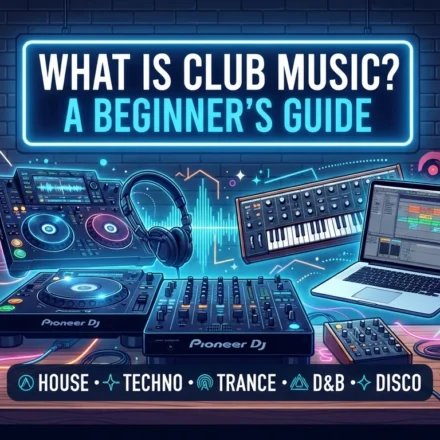


























What Is Club Music? A Beginner’s Guide
Club music is one of the most recognizable forms of modern electronic music. It is designed to create energy, movement, atmosphere, and rhythm, making it a natural choice for clubs, parties, festivals, workouts, night drives, and other high-energy moments.
But what exactly is club music? Is it the same as EDM? What genres are considered club music? And what makes a track sound suitable for a club?
This beginner’s guide explains the basics of club music, its characteristics, common genres, BPM ranges, and why it continues to be popular around the world.
What Is Club Music?
Club music is a broad term used to describe music that is designed primarily for dancing, movement, and energetic listening.
Unlike a single music genre, club music is more like a category that includes many different electronic styles. House, techno, trance, bass house, electro house, future rave, and other dance-oriented genres can all be used in club environments.
The exact sound of club music can vary significantly. One track may have a deep and powerful bassline, while another may focus on atmospheric synthesizers, melodic elements, or an explosive drop.
The common element is usually the combination of rhythm, energy, repetition, and a strong sense of movement.
What Does Club Music Sound Like?
There is no single sound that defines every club track, but several characteristics appear frequently.
Strong Rhythmic Foundation
A steady beat is one of the most important elements of dance-oriented music.
Many club tracks use a consistent four-on-the-floor kick pattern, where the kick drum hits on every beat of the bar. This creates a predictable rhythmic foundation that makes it easy to move or dance to.
Powerful Bass
Bass plays an important role in electronic dance music.
A well-designed bassline can give a track weight and energy without overwhelming the other elements. Different genres use bass in different ways, from deep house basslines to aggressive bass house sounds.
Repetition and Structure
Club music often uses repetition intentionally.
Repeating a rhythm, melody, or vocal phrase allows listeners to become familiar with the track while the producer gradually introduces new elements.
This is especially useful in DJ sets because tracks can transition naturally from one section to another.
Builds and Drops
Many modern club tracks use builds and drops to create tension and release.
A build gradually increases anticipation by adding sounds, effects, percussion, or rising melodies. The drop then releases that tension with a stronger combination of drums, bass, and other musical elements.
This structure is particularly common in energetic electronic music.
What BPM Is Club Music?
BPM means beats per minute, and it describes the tempo of a track.
Club music can exist at many different tempos, so there is no single BPM that defines the category.
Some slower house styles may sit around the lower end of the dance-music spectrum, while energetic house, techno, and other electronic styles can move into significantly faster tempos.
Many dance-oriented tracks are found somewhere around 120–140 BPM, although music outside this range can still be considered club music.
The important factor is not simply the BPM. The rhythm, groove, arrangement, sound design, and overall energy also determine how a track feels.
Is Club Music the Same as EDM?
Not exactly.
The terms club music and EDM are often used interchangeably, but they can describe slightly different things.
EDM stands for Electronic Dance Music and is an extremely broad term covering many electronic genres created for dancing and entertainment.
Club music is also a broad term, but it often emphasizes music intended for club environments, DJ sets, dancing, and high-energy listening.
There is significant overlap between the two categories.
For example, a bass house track can be both EDM and club music. A techno track can also be considered club music without necessarily being marketed using the EDM label.
In simple terms:
EDM = a broad category of electronic dance music.
Club music = music associated with dancing, clubs, DJ culture, and energetic environments.
The boundaries are not strict, and different listeners and music platforms may use these terms differently.
Popular Genres of Club Music
Club music includes many different genres and subgenres.
House Music
House music is one of the most influential styles associated with club culture.
It commonly features a four-on-the-floor beat, repetitive grooves, basslines, and rhythmic patterns designed for dancing.
There are many forms of house music, including deep house, tech house, progressive house, bass house, and electro house.
Techno
Techno is another major electronic genre with strong connections to club culture.
It often focuses on repetitive rhythms, electronic percussion, hypnotic patterns, and evolving arrangements.
Techno can range from atmospheric and minimal productions to extremely energetic festival-oriented sounds.
Trance
Trance is known for its melodic elements, atmospheric textures, emotional builds, and powerful electronic arrangements.
The genre has developed into many different styles and remains an important part of electronic music culture.
Bass House
Bass house combines house-style rhythms with heavier bass sounds.
It often features aggressive basslines, powerful drops, and energetic sound design, making it particularly suitable for high-energy environments.
Electro House
Electro house typically combines a strong dance rhythm with prominent synthesizers, bass, and energetic drops.
It has played an important role in the development of modern festival and club-oriented electronic music.
Future Rave
Future rave combines elements of progressive electronic music, powerful synths, driving rhythms, and large-scale drops.
Its futuristic sound and energetic structure make it popular among listeners who enjoy modern festival and club music.
Why Is Club Music So Energetic?
One reason club music feels energetic is the way multiple musical elements work together.
A strong kick provides the rhythmic foundation. The bass adds weight. Percussion creates movement. Synthesizers add texture and melody. Builds create anticipation, while drops provide a sense of release.
The arrangement also plays an important role.
A producer can gradually remove elements before a drop and then bring them back together at the right moment. This contrast can make the main section feel much more powerful.
Energy is therefore not only about making everything louder or adding more bass.
Good electronic production often creates energy through contrast, timing, rhythm, and arrangement.
Why Do People Listen to Club Music Outside Clubs?
Despite its name, club music is not limited to nightclubs.
Electronic music is commonly used for many different activities, including:
- Workouts
- Running
- Gaming
- Driving
- Parties
- Travel
- Creative work
- Background listening
- Festivals and live events
The consistent rhythm and energetic production can make certain electronic tracks suitable for activities where listeners want movement, focus, or motivation.
Instrumental club music can also be particularly accessible internationally because it does not depend on lyrics or a specific language.
Club Music and the Global Audience
Electronic music has a unique advantage: rhythm and sound can cross language barriers.
A listener does not necessarily need to understand lyrics to enjoy an instrumental electronic track.
This has helped electronic music develop a global audience, with different scenes and communities emerging around the world.
Modern electronic music also makes it easier for producers to combine influences from different genres and cultures.
As a result, the definition of club music continues to evolve.
How Has Club Music Changed?
Club music has changed dramatically over the decades.
Early electronic dance scenes helped establish the foundations for modern club culture. House and techno became major forces in dance music, while later developments introduced trance, progressive house, electro house, dubstep, bass house, future rave, and countless other styles.
Technology has also transformed music production.
Modern producers have access to powerful digital audio workstations, synthesizers, effects, samples, and increasingly sophisticated music-production tools.
This has made it possible to experiment with sounds that would have been difficult or expensive to create in earlier periods.
What Makes a Good Club Track?
There is no universal formula for a successful club track.
However, many effective dance tracks combine several important elements:
A strong rhythm that keeps the track moving.
A memorable musical idea such as a melody, synth pattern, bassline, or hook.
Effective arrangement that creates progression and contrast.
Well-balanced sound design where drums, bass, synths, and effects work together.
Energy and atmosphere that match the intended listening environment.
The best combination depends on the genre and the producer’s creative direction.
Final Thoughts
Club music is much more than a single genre. It is a broad musical world that includes house, techno, trance, bass house, electro house, future rave, and many other electronic styles.
Its defining characteristics often include rhythm, movement, repetition, bass, electronic sound design, and carefully constructed energy.
You do not have to be inside a nightclub to enjoy it. Club music can be part of a workout, gaming session, road trip, party, festival, or simply a personal playlist.
As electronic music continues to evolve, the boundaries of club music will continue to change as well.
Welcome to the world of club music. There is always another sound, another rhythm, and another track to discover.
Explore More Electronic Music
Discover high-energy electronic and club-oriented music on Apex Club Mix, featuring original instrumental tracks created for listeners who enjoy energetic electronic sounds, futuristic atmospheres, and powerful rhythms.